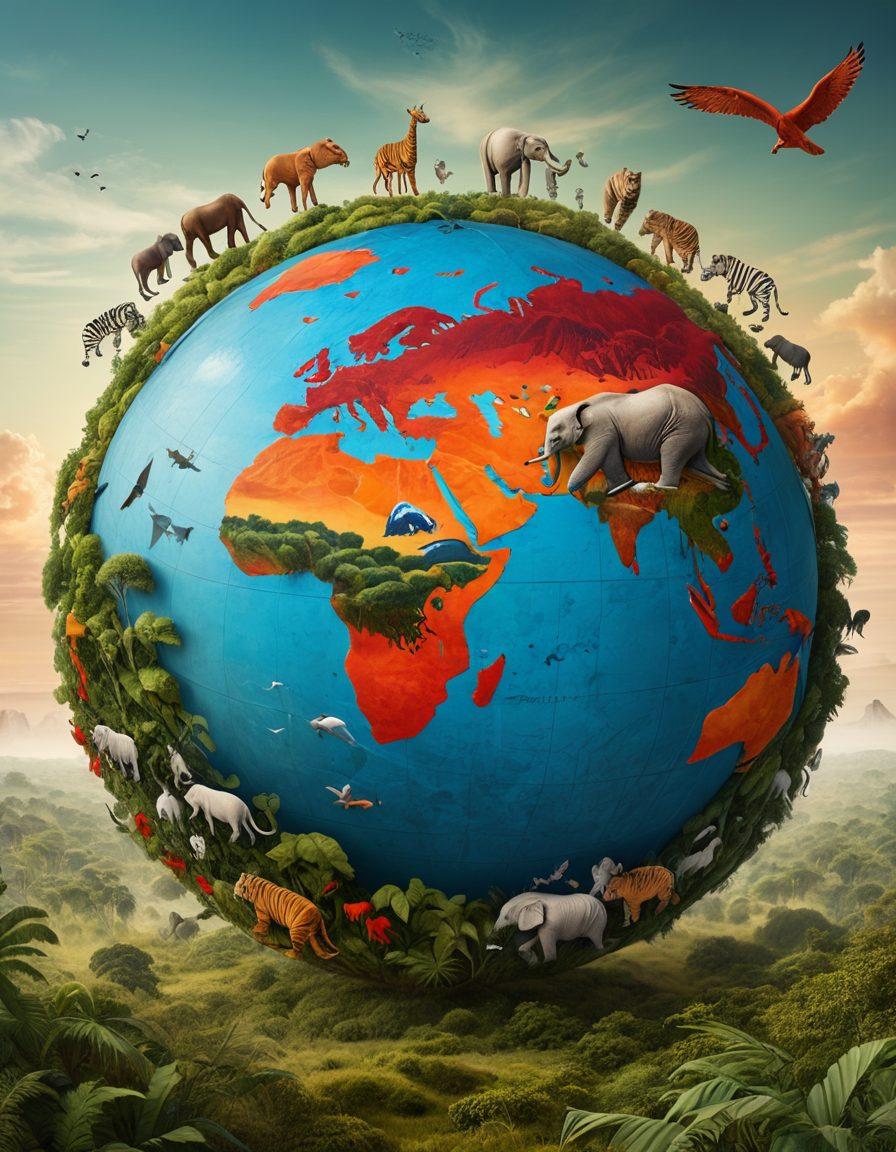
Understanding the IUCN Red List: Safeguarding Our World's Biodiversity
Have you ever wondered what the heartbeat of our planet sounds like? It pulses with every rustle of a tree in the wind, every leap of a dolphin over a wave, and every buzz of a bee in a flower garden. The International Union for Conservation of Nature (IUCN) has crafted a tool that lets us listen to this heartbeat: the IUCN Red List. The Red List of Threatened Species is not just a data repository; it's a call to arms for those who seek to protect our planet's incredible tapestry of life. But how does it work, and why is it so crucial for biodiversity conservation?
The IUCN Red List is essentially a survival meter for the innumerable species that inhabit our world. By assessing the conservation status of species across the globe, the Red List provides an early warning system for biological diversity. Imagine embarking on a treasure hunt where each discovered species is a glistening gem, and the IUCN Red List is the map guiding you away from the disappearing trails and closer to the areas in dire need of protection. This process of species assessment and evaluation involves meticulous data collection, rigorous scientific analysis, and extensive research to classify species into categories such as 'vulnerable species', 'endangered species', and 'critically endangered species'.
But the Red List is more than a list; it’s a narrative of life and death, of survival and extinction. For instance, think about the striking image of a polar bear on a melting ice floe—powerful, isn’t it? The Red List helps to represent such vivid tales, providing detailed accounts of species at risk and the threats they face. These stories act as catalysts for global conservation efforts. Whether it's through the protection of habitats, restoration of natural systems, or advocacy for environmental health and habitat health, the Red List's data emboldens efforts for wildlife conservation and species protection.
The effectiveness of the IUCN Red List lies in its collaborative spirit. To decode this environmental Rosetta Stone, the IUCN works with governments, conservation organizations, wildlife experts, and local communities. This collaborative approach ensures that the Red List is not just an abstract global tool but a practical local instrument for nature preservation. By highlighting ecosystems and ecological systems in peril, the Red List bridges the gap between scientific data and actionable conservation measures. It turns numbers and graphs into actionable plans for faunal and floral protection, ensuring the ecological balance is maintained.
In a world where biodiversity loss is accelerating, the Red List is a beacon of hope for species at risk of species extinction. It serves as a wake-up call for all of us to take immediate and effective action to protect the rich biological diversity of our planet. As we decode the keys to biodiversity conservation, it’s clearer than ever that the health of our environment and the well-being of countless species is intricately connected to our own survival. We are, after all, part of this great web of life. So, the next time you come across a creature—big or small—remember the Red List’s call: protect, conserve, and cherish the diverse life forms that share our beautiful planet.
How the IUCN Red List Strategies Impact Endangered Species Protection
Imagine a world where the vibrant hues of a coral reef are just memories, or the haunting call of a whale a thing of the past. These are not distant, hypothetical scenarios but tangible threats confronting our planet today. Here lies the relevance of the IUCN Red List, an essential tool developed by the International Union for Conservation of Nature. But how exactly do the strategies employed by the IUCN Red List impact the protection of endangered species? The answer is both intricate and inspiring, highlighting efforts that are vital for the sustainability of biodiversity and the health of many ecosystems across the globe.
The IUCN Red List, often dubbed the 'Red List of Threatened Species', is a comprehensive inventory of the global conservation status of biological species. It plays a critical role in wildlife conservation by evaluating and assessing the risk of extinction faced by countless species. The data garnered from this Red List serves as a gold standard in species protection strategies, providing a benchmark for natural conservation efforts worldwide. But this is more than just a database; it tells the stories of our planet’s most vulnerable and threatened species, from the mighty elephants to the tiniest insects.
A key aspect of the IUCN's strategy involves the meticulous species assessment process. By determining the conservation status of different organisms, conservationists and ecologists can identify species at risk and formulate targeted actions to mitigate biodiversity loss. It’s like being a doctor for nature, diagnosing ailments and prescribing treatments to restore health. The assessments take into account factors such as population size, distribution, habitat health, and threats like poaching or habitat destruction. This methodical approach ensures that resources are allocated efficiently to the species and ecosystems that need them most.
One poignant example of these strategies in action is the resurgence of the mountain gorilla. Classed as 'Critically Endangered' at one point, intense conservation efforts driven by data from the IUCN Red List have helped their population rebound. 'Every species, no matter how small, has a role to play in the greater balance of ecological systems,' as often said by many biologists. These success stories foster hope and demonstrate that, with concerted effort and robust strategies, wildlife conservation can reverse the trend of biodiversity loss and species extinction.
But the road ahead is long and winding—filled with the challenges of an ever-changing environmental landscape. The data from the IUCN Red List must be continuously updated and acted upon to adapt to new threats and changing conditions. The work of the International Union for Conservation of Nature is ongoing, requiring global cooperation and a collective will to preserve the richness of our world's biodiversity. In the end, safeguarding these habitats and the species that inhabit them ensures not only the survival of fauna and flora but the overall environmental well-being of our planet.
The Role of the IUCN Red List in Safeguarding Global Ecosystems
In a world where our natural environment is under relentless pressure, the International Union for Conservation of Nature (IUCN) stands as a beacon of hope. The IUCN Red List of Threatened Species serves as a critical tool in biodiversity conservation, meticulously cataloging the varying degrees of threat faced by countless species. But how exactly does this renowned red list help in safeguarding our global ecosystems? Let's embark on a journey to understand its role in preserving the intricate web of life that defines our planet’s ecological balance.
Imagine a library that doesn't just house books but contains the fate of the natural world within its volumes. This is precisely what the IUCN Red List represents—a comprehensive catalog not merely of endangered species but of our planet's health. The list assesses the extinction risks of thousands of species, providing vital data that informs conservation strategies. It’s not just about saving individual species; it’s about maintaining the biodiversity that sustains entire ecosystems. From fauna to flora, every entry is a pivotal piece of the puzzle that keeps our ecological systems functioning smoothly.
Now, picture this: a team of experts scattered around the globe, tirelessly evaluating species one by one. Each assessment on the red list represents a collective human effort—a commitment to species protection. By categorizing species as vulnerable, endangered, or critically endangered, the IUCN Red List doesn't merely spotlight the risks but also sheds light on potential conservation measures. This detailed species assessment acts as a clarion call to governments, organizations, and individuals worldwide, urging immediate action to prevent biodiversity loss.
How many species do you think we’ve lost to extinction due to human activities? The numbers are staggering—yet the work of the IUCN offers a glimmer of hope. This isn't just about despair; it’s about the proactive, data-driven fight against species extinction. When a species is added to the red list, it doesn't signify the end; it signals a focused effort to change its fate. Whether it’s through habitat restoration, legal protection, or breeding programs, the data provided by the IUCN paves the path for targeted wildlife protection initiatives.
In the grand scheme of natural conservation, the IUCN Red List operates as our early warning system. By monitoring habitat health and the well-being of threatened species, it enables timely intervention. It’s often said that 'what gets measured, gets managed,' and the red list exemplifies this ethos perfectly. Every entry on the list is a clarion call to reboot our conservation efforts, to rethink our impact on the ecological systems we depend on. As we witness the escalating threats to biological diversity, the role of the IUCN Red List becomes ever more critical—not merely as a record of loss but as a roadmap for environmental well-being and nature preservation.